
Building Health Sovereignty: Reflections from a CSO Side Event at the AU Extraordinary Summit on Health
Following the recent AU Extraordinary Summit on Health and a civil society event on its sidelines, we hear from two health advocates on their reflections on the events’ outcomes and the path forward for civil society.
On 21–22 July, African Union (AU) Heads of State met in Accra, Ghana for an Extraordinary Session of the AU Assembly on Ending AIDS by 2030 and Addressing Preventable Maternal and Child Deaths, Communicable and Non-Communicable Diseases Endemic to the Continent, and Strengthening Health Systems by 2030. The theme of the event was “Advancing Justice, Equity and Universal Health Coverage.“
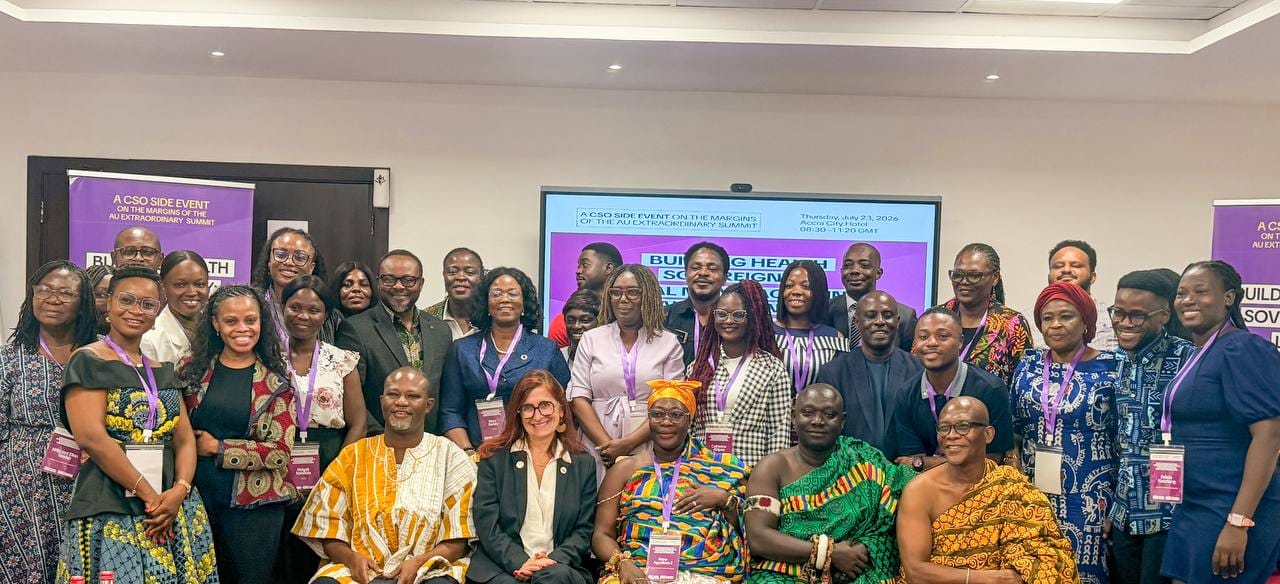
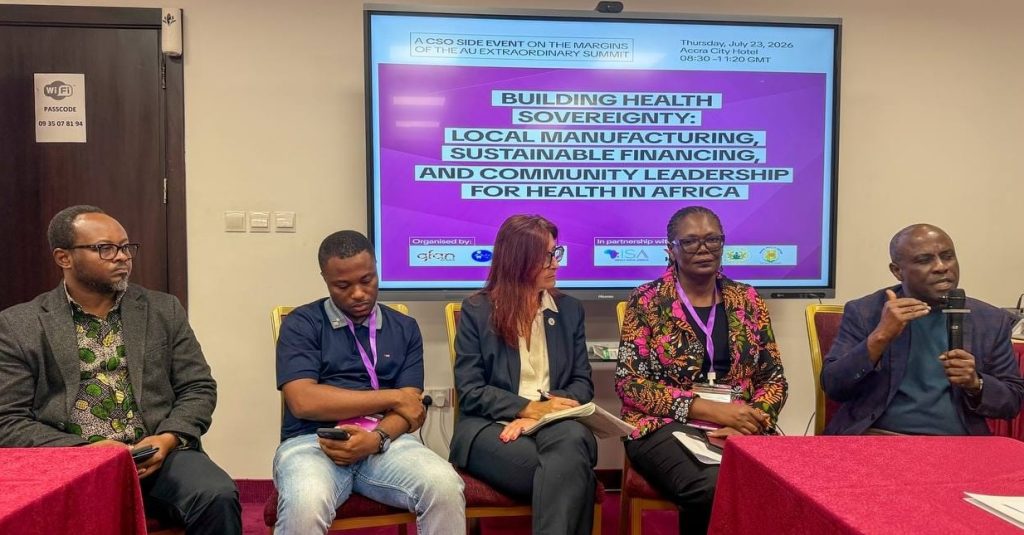
Following the Summit, GFAN Africa and Hope for Future Generations convened a civil society side event in Accra on 23 July under the theme of “Building Health Sovereignty: Local Manufacturing, Sustainable Financing, and Community Leadership for Health in Africa.” Bringing together civil society leaders, affected communities, policymakers, and development partners, the event focused on discussing civil society priorities on implementing the Summit outcomes and strengthening coordination on holding Member States to their Roadmap commitments.
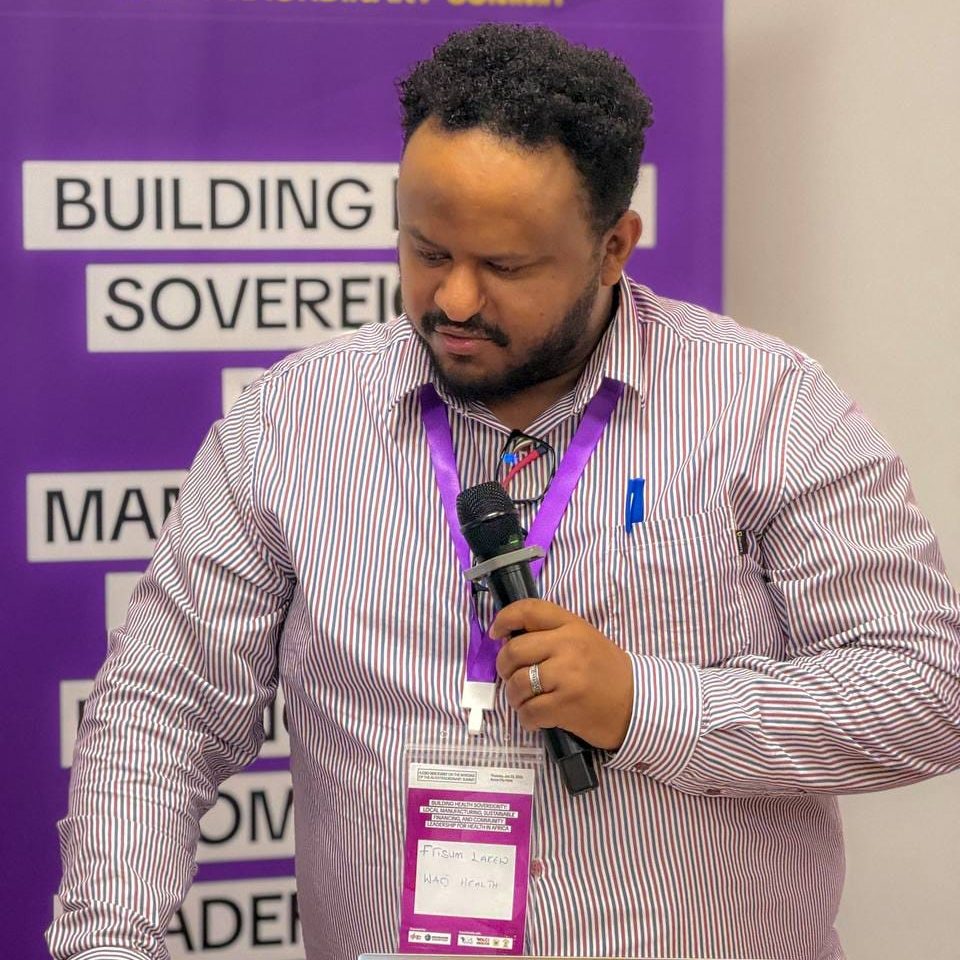
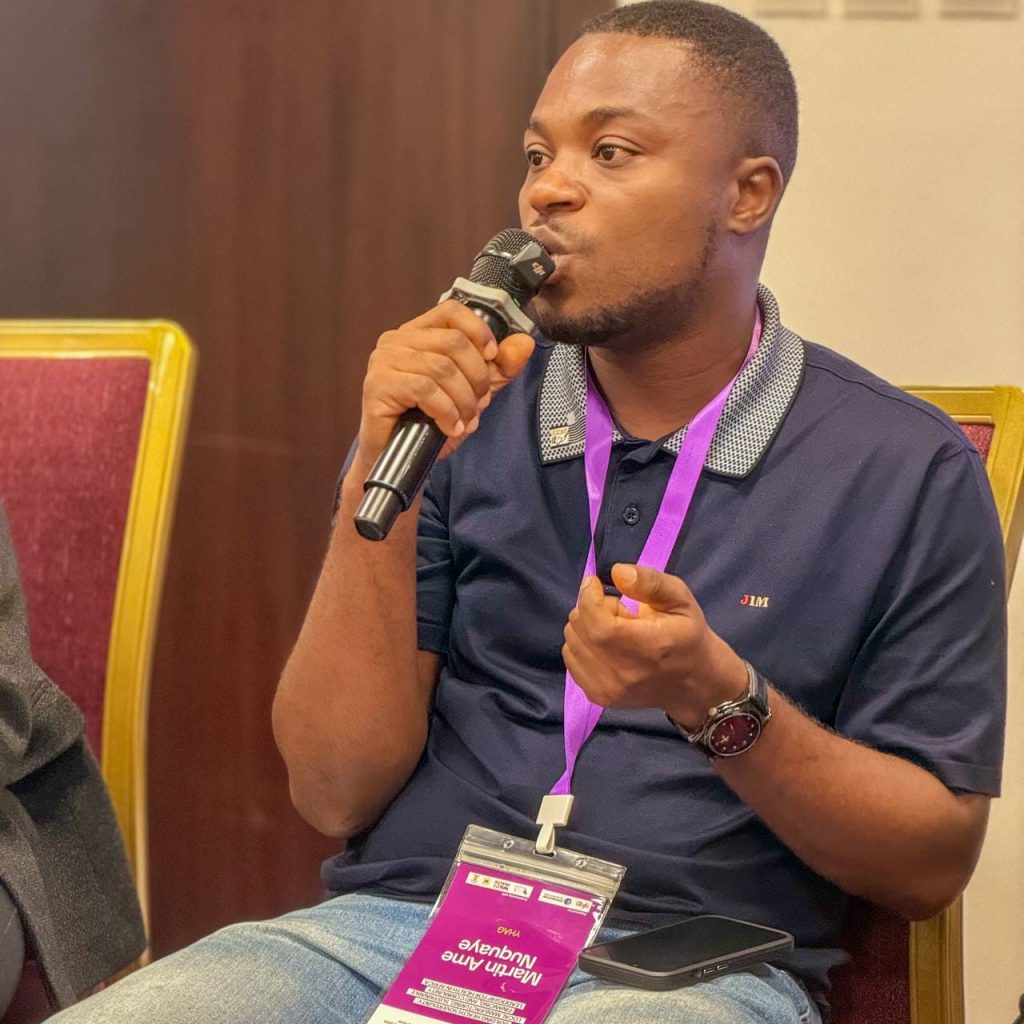
In this interview, we hear from Martin Ame Nuquaye, a youth health advocate collaborating with several organisations including the CSO event co-host, Hope for Future Generations, and Fitsum Lakew Alemayehu, AU Liaison Manager at WACI Health, about their reflections on the event: why it mattered, what came out of the discussions, and where civil society goes next to ensure the Summit’s commitments turn into real health outcomes.
1. Why was it important to convene a CSO side event on the margins of the African Union Extraordinary Summit on Health?
Fitsum: We know that communities and CSOs are the backbone of the health response in Africa. We operate at the grassroots level, bridging the gap between formal health systems and vulnerable populations, therefore it is critical that our voices are heard when determining health policies and commitments.
One of the Summit’s stated aims was around advancing accountable health systems, including the meaningful participation of key populations and community leaders in the design, implementation and monitoring of health programmes. With this in mind, GFAN Africa with Hope for Future Generations wanted to claim this opportunity for participation and come together to discuss the Summit’s outcomes, identify our shared priorities, and strategise to strengthen our coordinated advocacy following the Summit and how we will play a role in holding Member States to account for their commitments.
2. The theme of the side event was around ‘Building Health Sovereignty: Local Manufacturing, Sustainable Financing and Community Leadership for Health in Africa’. What did the discussions focus on and what were the key takeaways?
Martin: As a young health advocate, I hold the view that strong health systems can only be built when ordinary people have a real say in decision-making. Conversations centered on boosting local manufacturing of medicines and vaccines, growing sustainable financing for health, and putting communities in the driver’s seat of health responses. The biggest lesson to come out of it: Africa needs to invest in its own health systems, and communities must stay at the center of that process, not on the sidelines of it.
Fitsum: The event was a great opportunity for civil society and partners to come together to discuss and align our advocacy strategies to ensure the AU Roadmap to 2030 becomes a reality and translates into real health outcomes.
We came away with several priorities and key asks that we will continue to advocate for. This includes continuing to push leaders to fund health, through increased domestic health financing, innovative mechanisms including debt-for-health swaps, and sustained support for the Global Fund to close the funding gaps for HIV, TB and malaria.
We are also calling for community-led responses to be prioritised and for structural barriers such as human rights violations and social and gender inequalities to be addressed. Finally, we agreed that we have a very important role to play in monitoring Member States’ implementation of the Summit’s commitments and we must continue to use our platforms and networks to strengthen accountability.
3. The meeting brought together a diverse group, from parliamentarians, policymakers, civil society organisations, researchers, development partners and community representatives. Why was it crucial to have all of these voices in the room?
Martin: The CSO side event at the AU Extraordinary Summit on Health mattered because no single group can fix Africa’s health problems alone. Policymakers write the laws, parliamentarians approve the budgets, researchers bring the evidence, development partners bring support, and communities bring the lived reality of what’s actually happening on the ground. Bringing all of these voices into one room created space for shared solutions that no single actor could have reached on their own.
4. The summit led to reaffirmed commitment for the implementation of the AU Roadmap to 2030 and Beyond as the continental policy framework for strengthening health systems and sustaining the AIDS, TB and malaria responses in Africa. What do you see as the role for civil society in ensuring these commitments lead to real health outcomes?
Fitsum: Civil society’s role starts with staying in the room after the cameras leave. It’s easy to get commitments on paper; the harder work is making sure they don’t just sit there. One of our priorities and value-adds is that we carry the voices of affected communities into spaces where decisions are made, so that implementation isn’t designed in the abstract but is rooted in what people are actually experiencing on the ground.
We will continue to advocate for the need for community-led responses and meaningful participation in the implementation of the AU Roadmap to 2030 as we know from experience that a bottom-up approach isn’t just the fair thing to do, it’s also the cost-effective one. Member States should be serious about strengthening health systems by 2030 and investing in community-led responses, and formally recognising the role of civil society organisations and community health workers has to be part of that, not an afterthought.
Beyond that, our job is to keep asking the important follow-up questions: have governments actually invested more in health? Has the money actually moved? A commitment to increase domestic health financing means very little if the funds never make it to a clinic or a community health worker’s pocket. So civil society has to track that whole journey, from the budget line, to disbursement, to what’s actually happening at the facility level, and be willing to say publicly when the gap between the two is too wide.
We also have an important role to play in monitoring whether structural barriers, like human rights violations and gender inequalities, are affecting access to health services, and advocating for legislative, policy, and cultural changes to address these.
It is through working together on these actions that I think we can support turning the Roadmap’s commitments into something people can actually feel in their lives.
5. The Accra Declaration on the Implementation of the AU Roadmap to 2030, expected to be released soon, calls on Member States to submit annual progress reports and an annual accountability scorecard will help leaders see where implementation is on track and where faster action is needed. What role can communities and civil society organisations play in ensuring accountability for commitments made?
Martin: The AU Roadmap to 2030 and the Accra Declaration are meaningful commitments on paper, but they’ll only matter if governments are actually held to them. That’s where civil society and communities come in — tracking progress, gathering evidence, and pushing promises toward real action. Young people, too, have a role that can’t be skipped: advocating for policies that include everyone, pushing for accountability, and partnering with leaders to build health systems strong enough and fair enough to leave no one behind.
Want to know more? Check out these resources!
- AU Roadmap to 2030
- Highlights video from CSO side event by Hope for Future Generations
Martin Ame Nuquaye is a youth health advocate based in Accra, Ghana. He is passionate about sexual and reproductive health and rights (SRHR) and works with various NGOs to advance this cause, including Hope for Future Generations (HFFG). He has also served on the Ghana Community Advisory Team of the Digital Health and Rights Project, advancing conversations on digital health, human rights, privacy, and online safety, ensuring that the voices of communities most affected continue to shape policy and practice. Connect on LinkedIn
Fitsum Lakew Alemayehu serves as WACI Health’s Liaison Manager to the African Union Commission (AUC) and coordinates the African Civil Society Platform for Health (CiSPHA). Based in Addis Ababa, Ethiopia, he serves as a strategic interlocutor with continental bodies, including the African Union Commission (AUC), Africa CDC, AUDA-NEPAD, Africa Medicines Agency and the United Nations Economic Commission for Africa (UNECA). He represents WACI Health in various technical working groups and supports initiatives to advance community and civil society priorities within the AU across various portfolios, including Pandemic Prevention Preparedness and Response (PPPR), Universal Health Coverage (UHC), Health Financing, Health System Strengthening, HIV/AIDS, TB and Malaria. Connect on LinkedIn