
Decisions in Geneva, Impact in Communities: Understanding the World Health Assembly and Why It Matters for Civil Society in Africa
Ahead of WHA79 in May, find more information about the World Health Assembly and featured sessions on universal health coverage and the global health architecture reform.
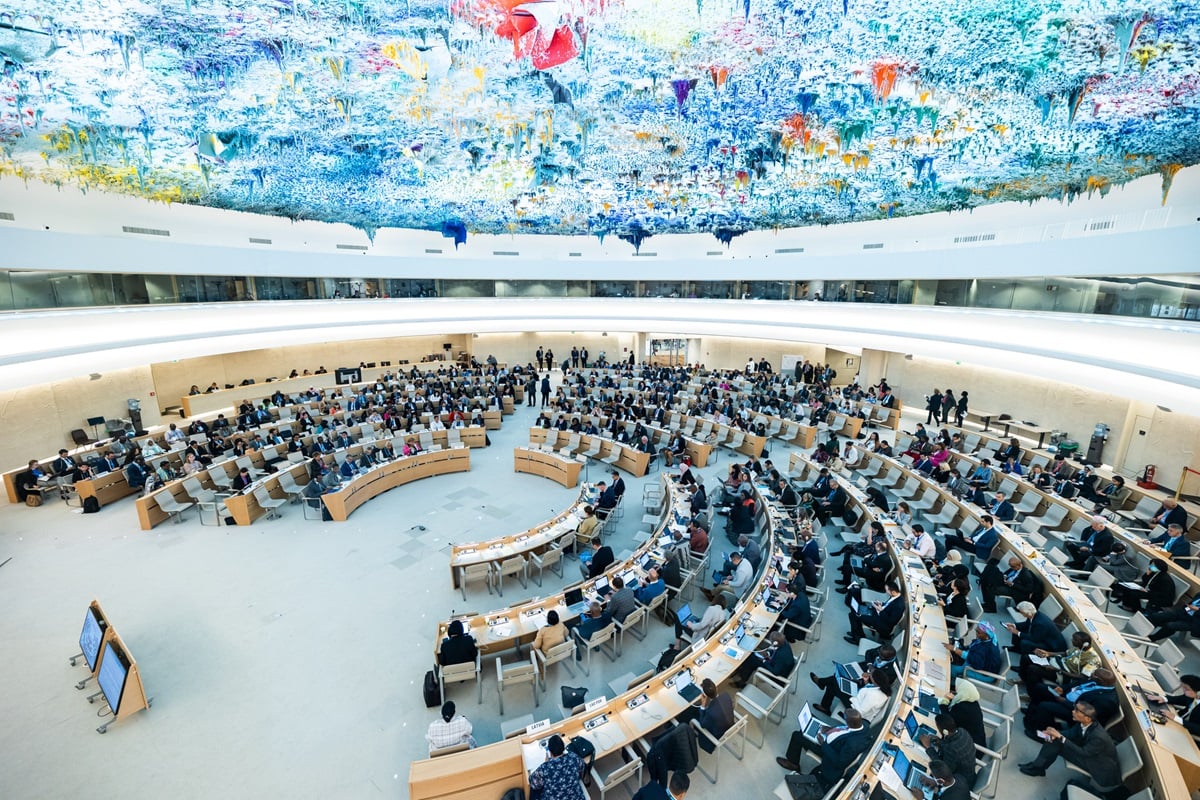
Each year, global health leaders gather in Geneva to make decisions that shape health systems around the world. But for many civil society organizations and communities, the World Health Assembly can feel distant and difficult to engage with.
With this year’s World Health Assembly taking place next week, this explainer aims to demystify this global event and highlight practical ways that communities and civil society organizations in Africa can get involved.
What is the World Health Assembly?
The World Health Assembly (WHA) is the main decision-making body of the World Health Organization (WHO), the United Nations (UN) agency dedicated to promoting and delivering global public health and access to health care.
Every year, generally in May, representatives (also known as “delegates”) from all Member States come together to set new health objectives, targets, and strategies that will guide their own public health work and the work of the WHO Secretariat.
The Assembly also oversees financial policies, approves the WHO’s budget, monitors progress in implementing work areas, and devises strategies to address gaps. Another function includes voting to appoint the organization’s Director-General for a five-year term.
The 79th World Health Assembly (WHA79) will take place 18–23 May 2026.
What’s on the agenda this year?
The agenda for the World Health Assembly changes each year and is determined by the organization’s Executive Board. The Executive Board is made up of 34 technical experts from Member States that have been elected by the WHA to serve three-year terms. The Executive Board meets every January to determine the agenda and any resolutions that will be brought to the World Health Assembly for consideration.
This year, key agenda topics include:
- Pandemic preparedness: shaping how countries prevent and respond to future health emergencies
- Health financing and Universal Health Coverage (UHC): determining how health systems are funded and who can access care
- Global health architecture reform: rethinking how global health institutions operate and who has a voice in decision-making
The WHA is important for civil society because it is a critical opportunity to influence decisions around health priorities, strategies, and funding, call for greater accountability and transparency in WHO’s decision-making and activities, and advocate for affected and marginalized communities.
As an African regional advocacy organization, WACI Health works to influence and shape discussions and outcomes at the World Health Assembly by convening CSOs throughout the year through our platforms to advocate on important health topics affecting the region.
How Civil Society Can Get Involved
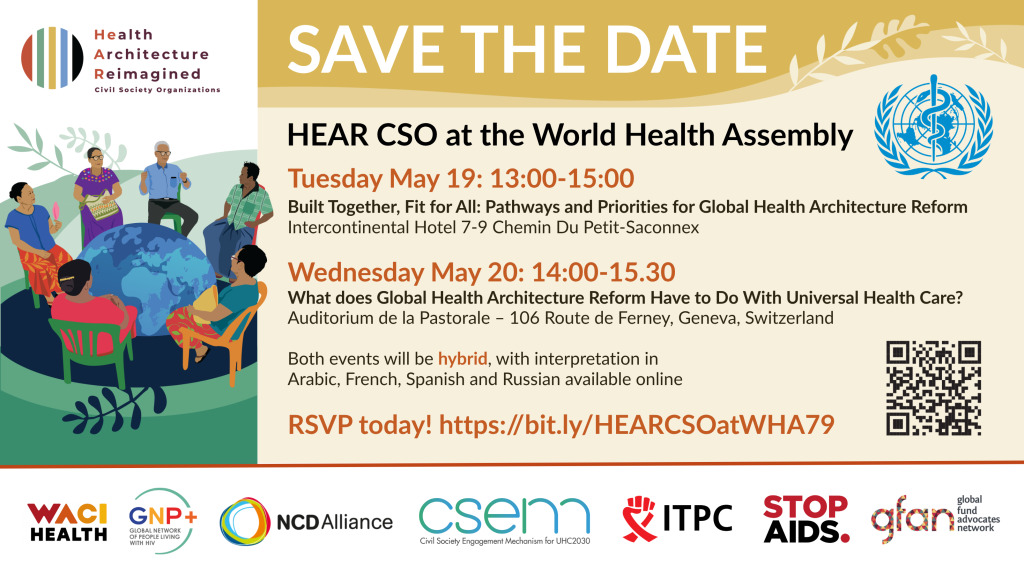
This year, there are many exciting side events at WHA that communities, CSOs, and individuals can register to join virtually. This includes:
Global health architecture reform
- Tuesday 19 May: 1300-1500: What does global health architecture reform have to do with universal health coverage?
- Wednesday 20 May: 1400-1530: Fit for All: Pathways and Priorities for Global Health Architecture Reform
These sessions are hosted by the Health Architecture Reimagined Civil Society Organizations Consortium (HEAR CSO), of which WACI Health is a consortium member.
Register here (in-person and online): https://forms.gle/nzXKg1Lds7bBT5va9
Universal Health Coverage (UHC)
- Monday 18 May: From Gaps to Gains: Delivering UHC through gender-responsive health systems
- Monday 18 May: Launch of the UHC2030 narrative on digital transformation of health systems for universal health coverage
- Tuesday 19 May: The Social Participation Village: Where every voice shapes health governance
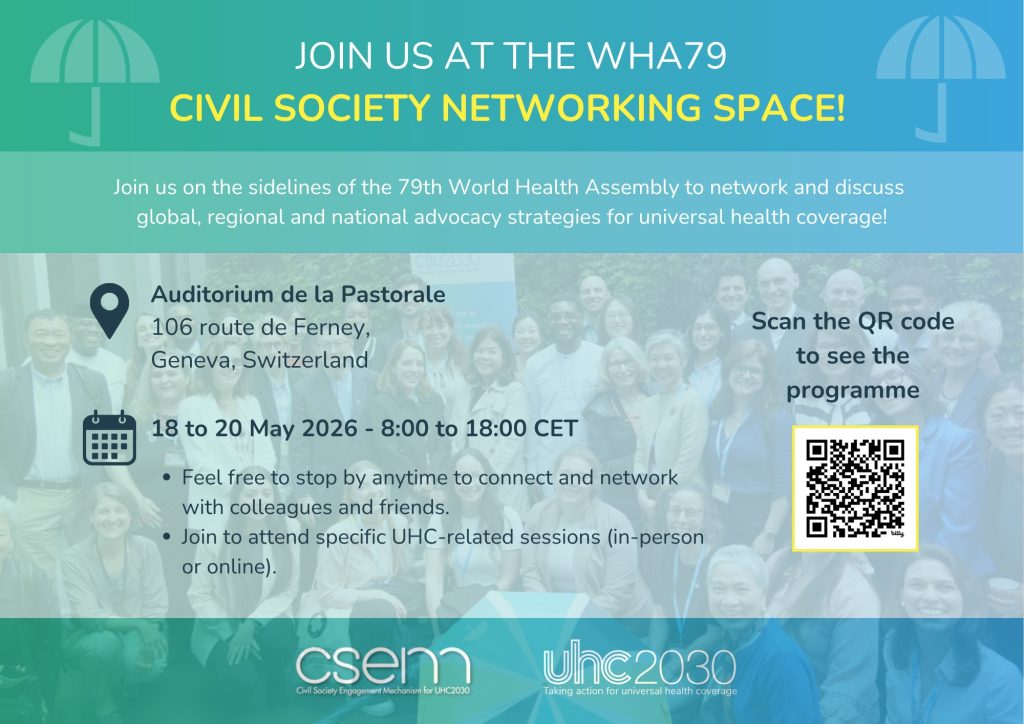
The Civil Society Engagement Mechanism for UHC2030 page includes information on how to register for these events, as well as many more (in-person and online)!
The World Health Assembly may take place in Geneva, but its outcomes are felt far beyond it. For civil society, engaging in these processes is not optional – it is essential to ensuring that global decisions reflect local realities.
We encourage communities and civil society organizations in Africa to mobilize and engage with the WHA. Together, our voices are stronger, and our impact can be greater!