CategoriesGFAN Africa AUS

Unite Africa Solidarity: Fostering Unity and Support for Uganda’s LGBTQI+ Community

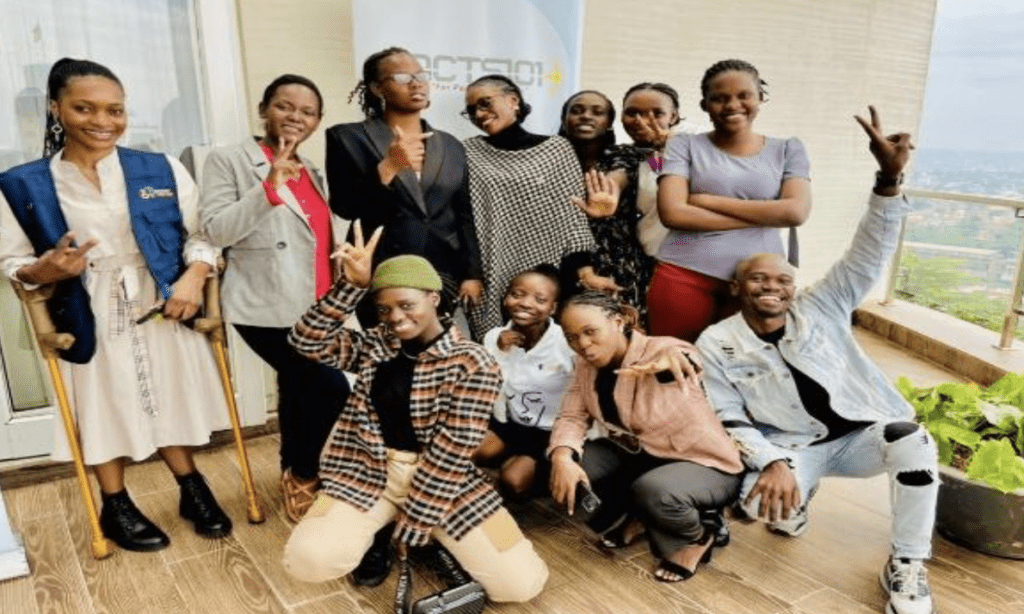
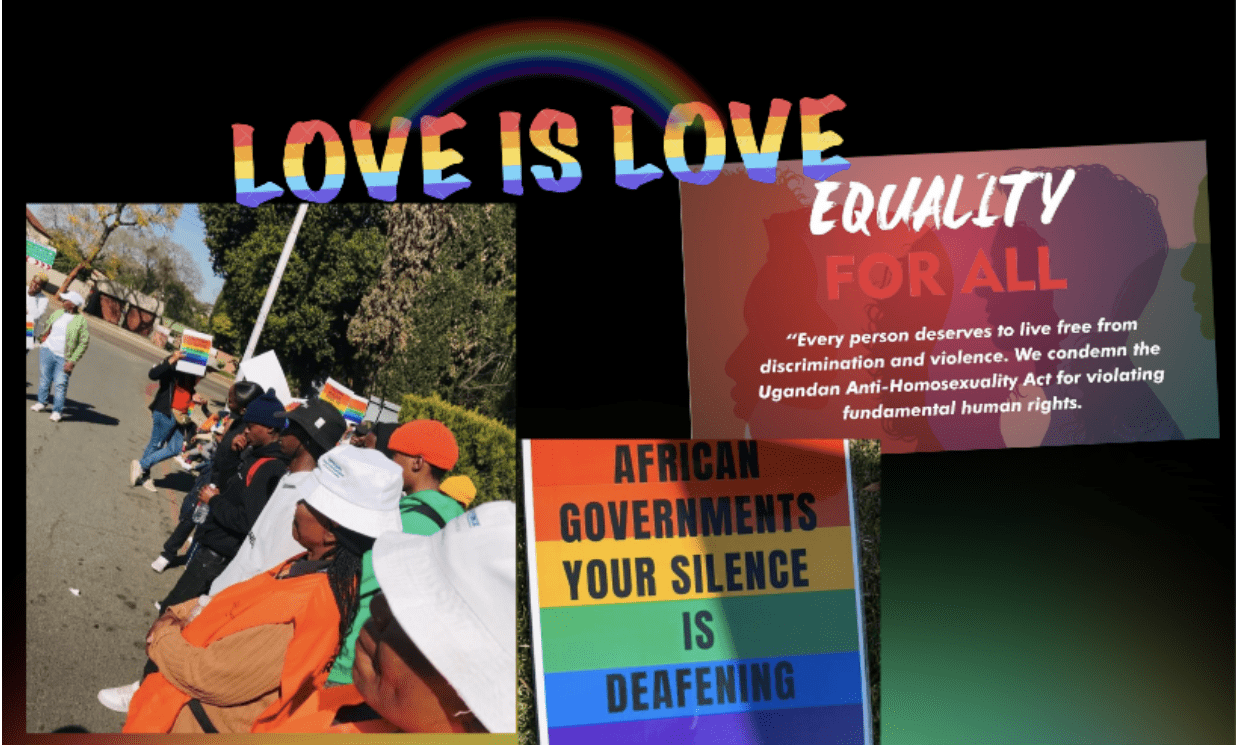
In the heart of a virtual gathering on July 26th, 2023, a powerful movement unfolded—united African advocates in solidarity with our comrades in Uganda. Advocates from diverse corners of Africa united for a common cause: standing in solidarity with Uganda’s marginalized LGBTQI+ community. This was no ordinary day; it was an extraordinary assembly of voices, ideas, and passion, aimed at combating the discriminatory Ugandan Anti-Homosexuality Act 2023 that was passed on 29 May 2023.

Amid the global pursuit to end AIDS by 2030, Uganda emerged as a beacon of progress in the fight against HIV. However, the recent enactment of the Ugandan Anti-Homosexuality Act 2023 threatens to undo these hard-fought gains. The Act, laden with severe punishments, including the death penalty for homosexuality, has cast a shadow over marginalized communities, particularly the LGBTQI+ individuals who are already grappling with prejudice.

Comrades from diverse corners of Africa mobilized for a Regional Day of Action—a resounding call for unity, awareness, and advocacy. Comrades across Africa rallied to express their unwavering support for Uganda’s LGBTQI+ community and to highlight the far-reaching repercussions of the Act on public health and human rights.

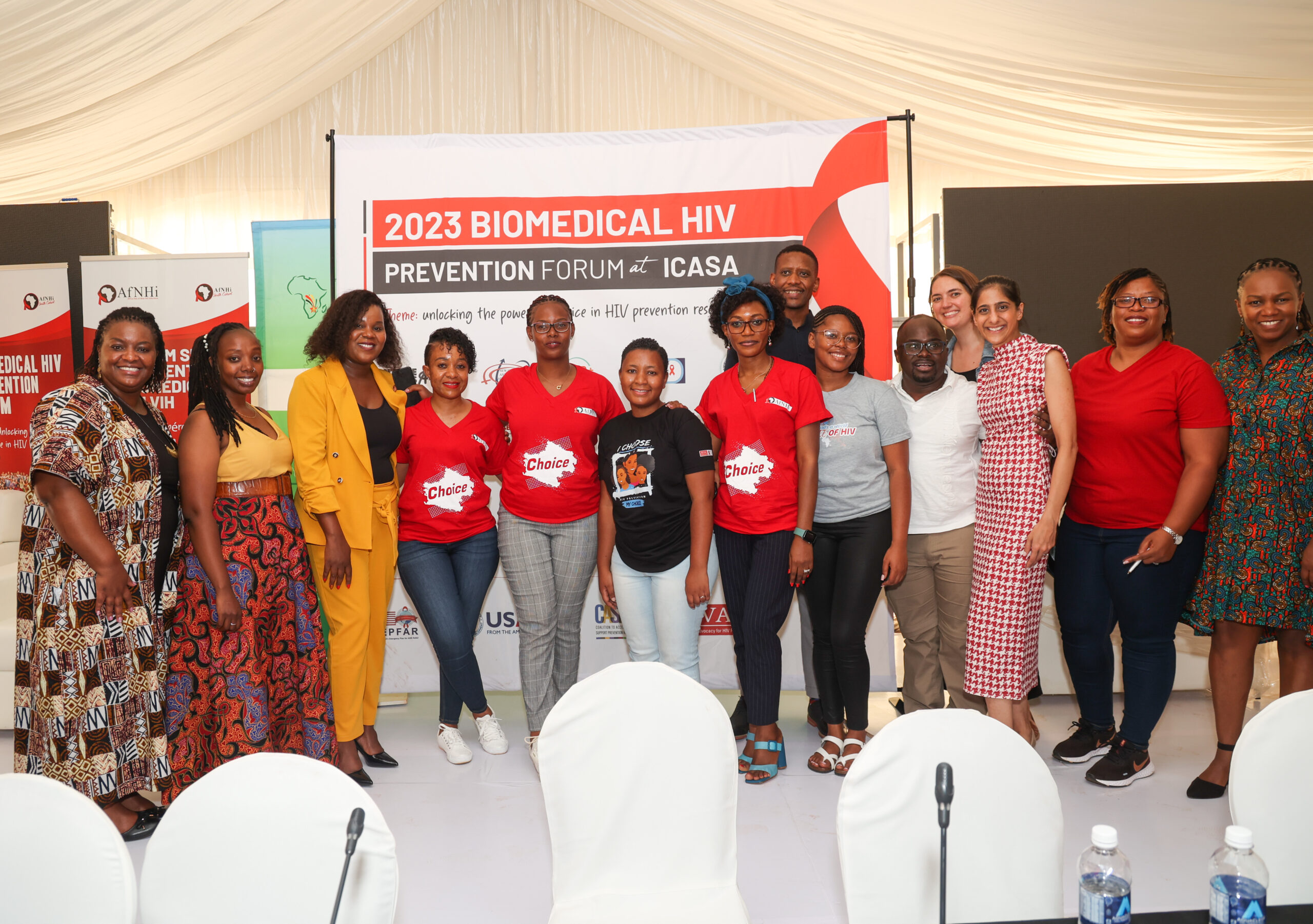
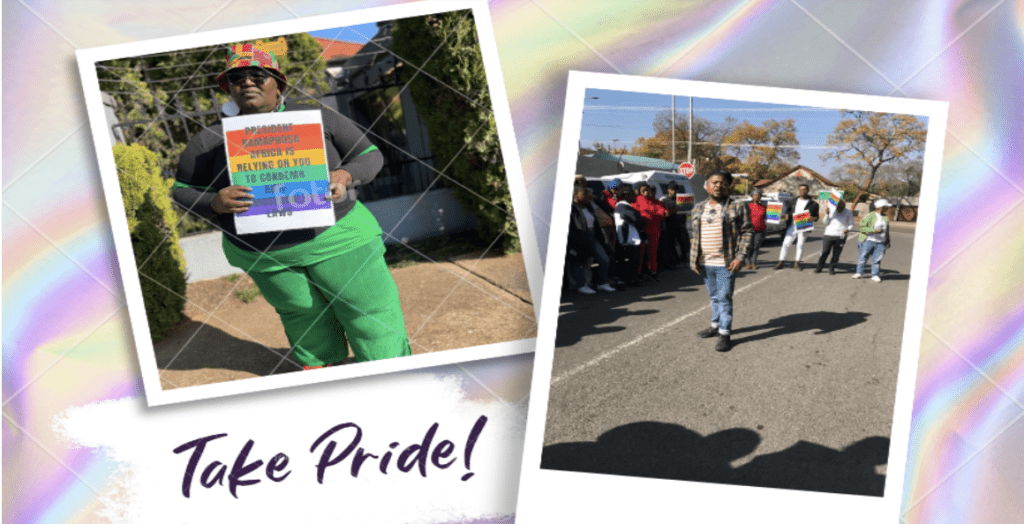
In a remarkable display of unity, community representatives, civil society organizations, activists, and stakeholders convened in South Africa’s Uganda High Commission. Here, stories and testimonies were shared, illustrating the real impact of discriminatory legislation on public health efforts. The gathering wasn’t just about discussing challenges; it was a testament to the resilience of those standing against oppression.

These very same stories were amplified virtually and the flame of solidarity extended beyond borders. Throughout the region, a virtual Twitterthon resonated with messages of support, using social media as a dynamic platform to amplify the voices of unity and advocacy.

Comrades from Kenya, Tanzania, Ghana, and beyond joined hands, united in the digital realm.

With the vigor of a rallying cry, an advocacy campaign was launched. Policymakers, health authorities, and international organizations were engaged in a coordinated effort to apply pressure on the Ugandan government to repeal the Act and uphold the values of human rights and inclusivity.

The climax of this regional day of action was the Virtual Extraordinary Meeting. Comrades gathered to debrief on the Regional Day of Action, gain insights from the Uganda Representative about the ground situation, and discuss the legal perspective on the Act. Allies from various sectors—the LGBTQI+ Community, Religious Leaders, Sonke Gender Justice, Policy Makers, and NGO Delegation to GF Board—expressed unwavering support and solidarity.

This union of voices, ideas, and determination paints a vivid picture of unity in diversity. The struggle against discriminatory laws is not isolated to Uganda alone; it echoes across the continent. Our call to all African governments is to uphold the dignity and fundamental rights of their citizens.

Appreciation goes out to the planning partners 

CategoriesAfNHI Article

Engage online toward the High-level Meeting on UHC – #UHCHLM

Here we are: the UN High-level Meeting on Universal Health Coverage (UN HLM on UHC) is only 2 weeks away! This is a major opportunity to reinvigorate progress toward #HealthForAll. And everyone can engage to raise their voice! Here are 3 ways you can mobilize online ⬇️ #UHCHLM Engagement

1️⃣Countdown to the UN High-Level Meeting on UHC – Online Campaign

Ahead of the High-level meetings in New york,  join UHC advocates from all around the world for a final online campaign on #UHCHLM. From 11 to 20 September, the campaign will focus on a specific action area from the UHC Action Agenda, to call for concrete actions following the adoption of the  2023 Political Declaration on UHC.

To participate:

  • Download the calendar here
  • Engage via your social media channels – following  CSEM (@CSOs4UHC) and UHC2030 (@UHC2030) on x.com (former Twitter), and on LinkedIn (UHC2030)

Visit the UHC2030 website for more information.

2️⃣Participate in the online Chat on Leaving No One Behind

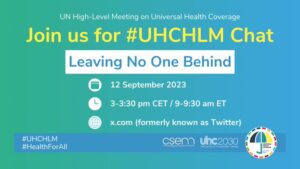
On September 12, 3-3:30 pm CET / 9-9.30 am ET, UHC2030 and CSEM will coordinate a #UHCHLM chat on x.com (formerly known as Twitter) on leaving no one behind.

This online chat is an opportunity to mobilize the UHC movement and rally a diverse audience behind UHC.

We invite you to engage in this short chat and take the opportunity to share and elevate key messages, resources and best practices. Please find here more information, and the 5 questions that will be asked: https://csemonline.net/event/uhchlm-chat-about-leaving-no-one-behind/

3️⃣ Stay up to date on the latest information on #UHCHLM: 


CategoriesAfNHI Article

Empowering Youth Advocacy for Global Health

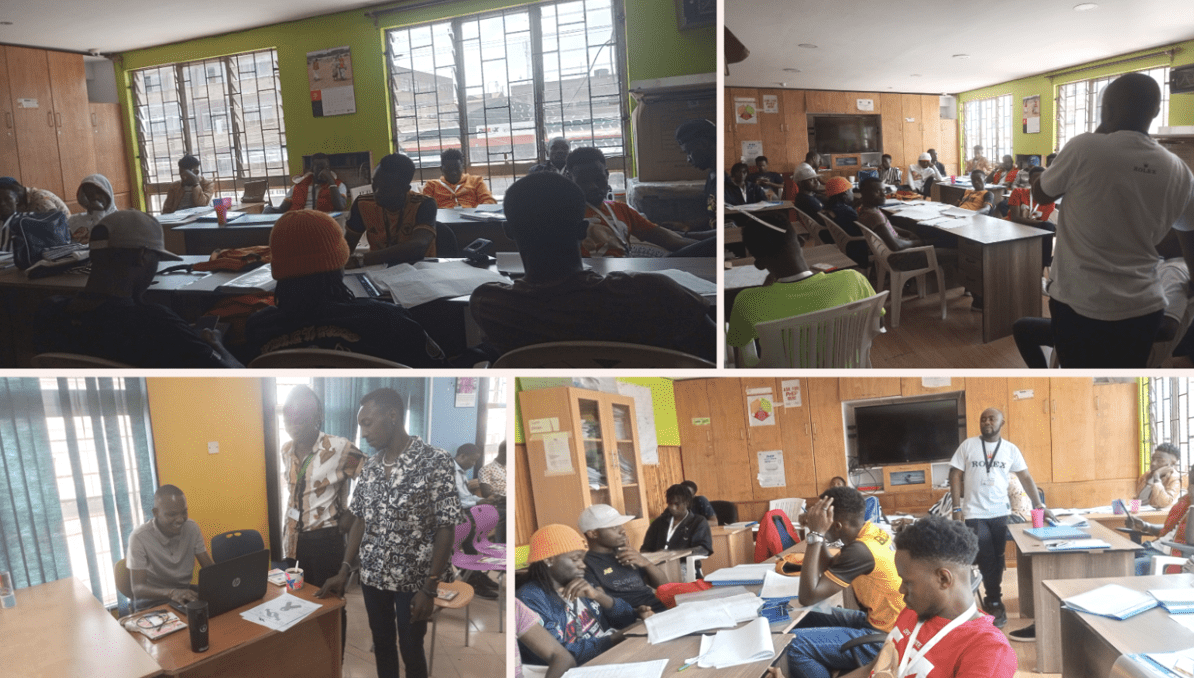
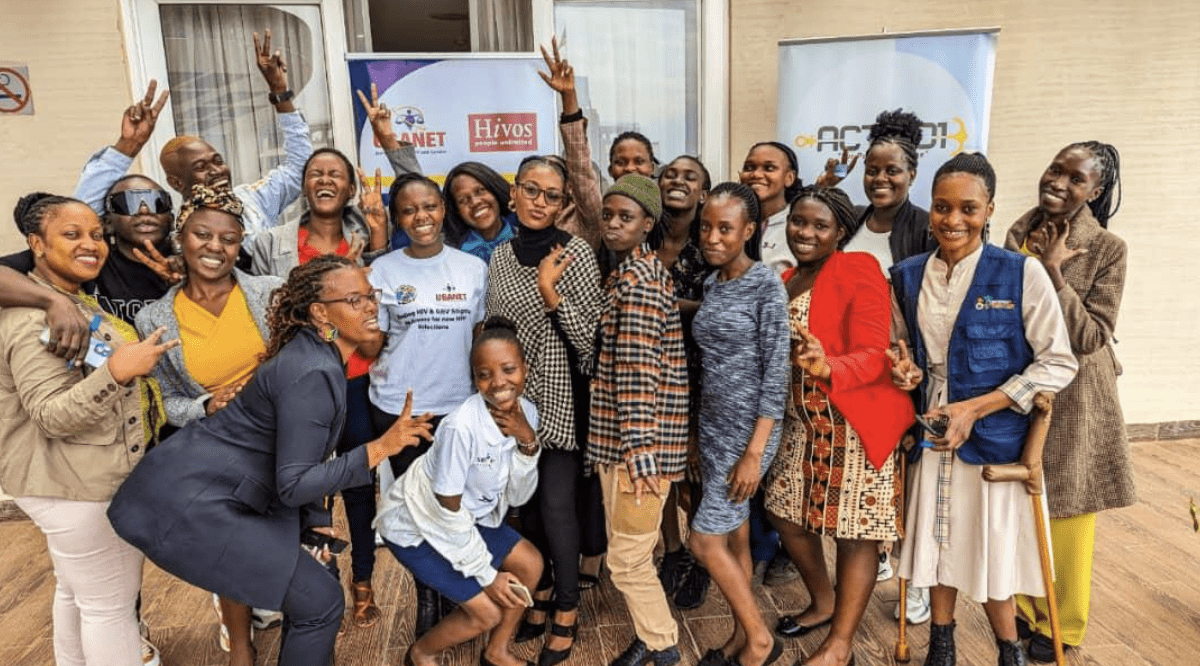
In the heart of vibrant Nairobi, a dynamic gathering of 30 young individuals came together in August 2023. These were the champions of tomorrow, belonging to the Adolescent Girls and Young Women (AGYW) cohort. Their mission: to mark World Youth Skills Day with a bang, celebrating the boundless potential of young minds and their pivotal role in shaping our global health future.

This gathering had a clear purpose, and its objectives set the stage for exciting engagement outcomes.

  • The participants were on a quest to make the world resonate with the advocacy efforts of the DAPI Ring, both on a national and global scale.
  • Foster Inclusivity:- They sought to create an inclusive dialogue, a movement that would resonate far and wide, powered by WithMeInMe.
  • Introducing the Choice Manifesto:- An introduction to the Choice Manifesto was on the agenda, igniting the spark of change.

Advocacy on the DAPI Ring: In the spotlight was the imperative of accurate information, dispelling myths, and the fight for free and accessible HIV prevention tools. Also highlighted was the progress of the CATALYST studies in Kenya and the progress of the activation sites to date.


Skills and Empowerment: The power of advocacy skills and communication took center stage. Social media emerged as a mighty weapon for spreading awareness. Evidence-based advocacy was highlighted as a critical tool in modern day advocacy. The participants went ahead and brainstormed around various ways digital media advocacy can amplify the call for inclusion of the DAPI Ring on the HIV Prevention basket of choice.

LGBTQI Inclusivity: The discussions ripped through stigmas, championing equality. Discussions illuminated a critical imperative: dismantling stigmas and dispelling misconceptions surrounding LGBTQI communities. The spotlight was on promoting acceptance and nurturing inclusivity within HIV prevention programs. In this narrative of change, education and awareness emerged as potent catalysts for fostering equality. This collective insight resounded loudly, underscoring the WithMeInMe campaign as a vital platform for meaningful dialogue. It hammered home the urgency of inclusivity and the indispensable role of education in propelling effective change within the realm of HIV prevention efforts.

Global Fund Writing Process:Ruth Jerop, AYAREP Executive Director and a community representative on the Kenya Coordinating Mechanism (KCM), graced us with an update on the Global Fund writing process. She stressed the critical need for the Dapivirine (DAPI) ring, citing past challenges faced by interventions like PEPFAR in effectively combating HIV. Jerop emphasized that the DAPI ring’s potential to empower individuals to take control of their bodies and sexual health has not been fully realized. Urgency looms, and addressing the roadblocks is crucial. She called for a thorough examination and rectification of these hindrances, ensuring that the Global Fund’s financial resources lead to a comprehensive, culturally sensitive implementation strategy.  As she concluded her address, Ruth appealed to the young audience to grasp the challenges faced by different demographics to enable the advocacy to be evidence-led. 

In the end, this electrifying gathering was a rallying cry for action. The Youth advocates pledged their dedication to HIV prevention, inclusivity, and the continued advocacy of the DAPI Ring. The Choice Manifesto launch scheduled for September 2023 lays a promising secure and effective discussions around the HIV Prevention Choice agenda regionally.

AfNHi Secretariat

CategoriesArticle Press Release

Empowering Safely: Safe Digital Advocacy for Girls and Young Women!

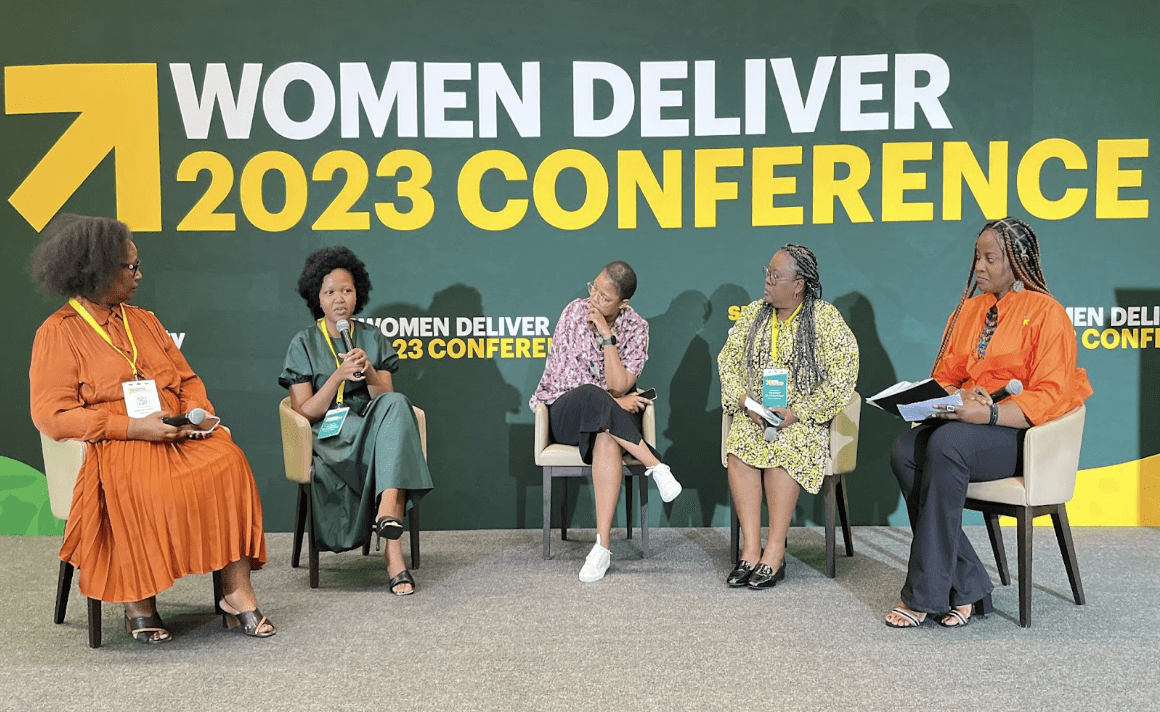
Gracious Lekgoathi, an AfNHi youth cohort member and HER Voice Fund Ambassador for South Africa used her digital advocacy skills to create an impact at the Women Deliver Conference 2023. As a panelist on the topic of “Online Community Building,” she emphasized the importance of educating and investing in mental health support for girls and young women in the digital space. Gracious stressed the need for both digital and traditional advocacy to create safe and inclusive online spaces.

She also stressed the need for both digital and traditional advocacy in order to create safe and inclusive online spaces for girls and young women. She used the digital advocacy skills she learned as part of the AFNHi youth cohort during the Youth Leadership and Advocacy programme to share her insights on creating safe and inclusive online spaces for girls and young women.
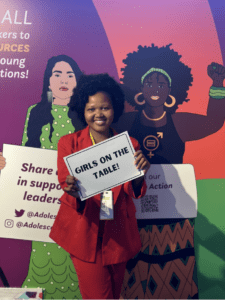
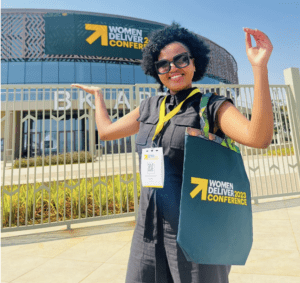
The Women Deliver Conference is a global gathering of leaders from the worlds of government, business, philanthropy, and civil society to discuss the health, rights, and well-being of girls and women. The conference was held in Kigali, Rwanda, from 16 to 20 July, 2023.

Her own experiences as a social impact digital content creator has given her a unique perspective on the power of digital media. She has seen how it can be used to raise awareness of important issues, connect with others, and build community. However, she also recognizes the potential for digital media to be used for harm. That’s why she is so passionate about using her digital advocacy skills to promote safe online spaces for girls and young women.

“We must not take for granted that girls are aware of how violence can occur online,” Lekgoathi said. “We need to educate them on their digital rights and how violence can surface online.”

Gracious also emphasized the importance of storytelling in digital advocacy. She believes that personal stories can be a powerful way to connect with others and raise awareness of important issues. “As we hold our policymakers accountable, let’s take into account that maybe they too need some of this information broken down to simpler terms for them to comprehend,” Gracious said. “This can be done through the storytelling of personal experiences.”

The AfNHi Youth Leadership and advocacy program which she is currently undergoing has provided Gracious with the skills and resources she needs to take her digital advocacy to the next level. She has so far learned how to create engaging content, build relationships with key stakeholders, and measure the impact of her work. She also gained the confidence to speak out on issues that matter to her, even when it’s difficult.

“I want to inspire girls and young women to use digital advocacy to become the best vision of themselves,” she said. “We have the power to change the world, and I believe that digital media is a powerful tool that we can use to do that.”

About the HER Voice Fund

The HER Voice Fund is a global initiative empowering adolescent girls and young women (AGYW) to advocate for their health and rights. Managed by Y+ Global, a youth-led organization promoting sexual and reproductive health, the fund uses digital advocacy through social media, online platforms, and training AGYW on digital tools to raise awareness and connect them to share experiences.

Gracious participation in the Women Deliver Conference was an important opportunity to raise awareness of the issue of violence against girls and young women online. Her digital advocacy skills helped her to reach a wide audience and to share her message of hope and empowerment. She is an inspiration to girls and young women everywhere, and her work is making a difference in the lives of those who are most vulnerable.


CategoriesArticle

Pride Rising: LGBTQ+ Activists Shaping Change in Kenya

In recent years, LGBTQ+ activists in Kenya and Uganda have been at the forefront of the fight for equality, challenging discriminatory laws, attitudes, and policies. While Kenya has seen successful campaigns like #TheQueerRepublic, the struggle for LGBTQ+ rights extends beyond national borders. A parallel battle is taking place in neighboring Uganda, where activists are facing significant challenges in their quest for justice and acceptance.

In December 2021, the late Professor George Magoha, who was then the Education Cabinet Secretary-Kenya, issued a directive that not only deprived queer children of quality education but also fueled negative attitudes, stigma, and discrimination against them. He stated, “Right now there are contemporary cases of children who are homosexual and lesbian, they must go to day schools close to their homes. Your responsibility as headteachers should be for the greater majority, not a few individuals. Do not allow yourself to be intimidated by children.”

These remarks by the Education Cabinet Secretary were not only harmful but also sexualized children, denying them the opportunity to receive the best education in institutions of their choice. Moreover, these comments violated the safety and protection of children. By mandating that learners perceived to be LGBTQ+ attend day schools, their education was disrupted, and they were exposed to the risk of being disowned by their families or facing attacks from homophobic members of society.

In response to this injustice, Marylize Biubwa, a black Radical and Angry queer intersectional feminist and activist initiated a petition in collaboration with allout.org. The aim of the petition was to bring about change and ensure the safety of LGBTQ+ individuals, particularly children, in Kenya. It called upon allies from Kenya and around the world, media outlets, and individuals from various backgrounds to join #TheQueerRepublic in signing the petition. The objective was to guarantee a secure and inclusive environment for kids in Kenya. You can find the petition at the following link: https://action.allout.org/en/m/78d631fb/?utm_campaign=mgp-78d631fb&utm_source=twitter&utm_medium=social_share- 

The petition gained momentum in January 2022, and Marylize Biubwa, along with other dedicated activists, organized a protest to voice their opposition to the Education Cabinet Secretary’s remarks and the government’s intention to ban queer children from enrolling in boarding schools. The protest was a powerful expression of unity and resilience, drawing attention to the unjust treatment of LGBT+ individuals in Kenya. It served as a powerful symbol of resistance and a call for change. https://fb.watch/lzCO1AEXZs/?mibextid=KZAQMH

The success of the protest was further solidified when the activists received official approval to conduct the demonstration. This acknowledgment not only validated their cause but also demonstrated the government’s recognition of the importance of protecting the rights of all individuals, regardless of their sexual orientation or gender identity.

As a result of the campaign’s efforts, The Queer Republic, an organization dedicated to advocating for LGBTQ+ rights, became institutionalized, providing a platform for ongoing activism and support. This story serves as a testament to the power of collective action, determination, and the unwavering belief in equality and justice. By standing together and speaking out against discrimination, the ILGBTQ+ activists and organizations in Kenya have made significant strides towards a more inclusive and accepting society.

Despite the adversity they face, LGBTQ+ activists in Uganda continue to demonstrate extraordinary courage and resilience . They strive to create safe spaces, provide support networks, and advocate for their rights against all odds. Organizations like Sexual Minorities Uganda (SMUG) and Human Rights Awareness and Promotion Forum (HRAPF) work tirelessly to protect and amplify the voices of the LGBTQ+ community, challenging discriminatory laws and providing vital assistance to those in need.

The fight for LGBTQ+ rights in Uganda requires international solidarity and support. The global community must join forces with local activists, amplifying their voices, and pressuring governments to uphold human rights and end discrimination. Continued awareness campaigns, petitions, and diplomatic efforts are vital to create lasting change and provide hope for LGBTQ+ individuals in Uganda and East Africa community.

Sources: 

https://www.mambaonline.com/2022/01/17/kenya-lgbtq-students-protest-over-boarding-school-ban/

https://twitter.com/search?q=Fahe_K%23TheQueerRepublic&t=maGcGoyUe73l1Z2DdhW2fw&s=09

CategoriesArticle Press Release

United Nations High-Level Meeting on Universal Health Coverage 2023

The 2023 United Nations High-Level Meeting (UN HLM) on universal health coverage (UHC)

provides countries and all stakeholders an opportunity to reinvigorate progress towards delivering health for all.  An action-oriented outcome focusing on building resilient and equitable health systems is key to provide the basis for implementation and accountability.

What is the Action Agenda from the UHC Movement?

The Action Agenda from the UHC movement is a set of action-oriented policy recommendations that country leaders should implement to strengthen resilient and equitable health systems, advance universal health coverage and health security, and deliver health for all by 2030. The UHC Action Agenda was developed by an inclusive, multi-stakeholder Task Force, which brings together twenty representatives from UHC2030 constituencies and beyond. It was informed by a public consultation which gathered 830 responses from over 100 countries. It was endorsed by the UHC2030 Steering Committee. Learn more.

Toward the High-level Meeting on UHC
The President of the UN General Assembly hosted an interactive multi-stakeholder hearing on UHC on May 9, 2023. The summary report from the hearing constitutes an official input for the drafting the Political Declaration on UHC. Intergovernmental negotiations on the Political Declaration on UHC started shortly after the hearing and should close by the end of July 2023.


CategoriesArticle Press Release

HIV prevention advocates in Africa, Civil Society, and Communities condemn the signing of the Ugandan Anti-Homosexuality Bill into law by President Museveni: Calls for dialogue

HIV prevention advocates, communities, and representatives of diverse health networks strongly condemn President Museveni’s recent ascent to the anti-homosexuality bill, which poses a severe threat to the fundamental principles of human rights and equity in Uganda. The decision to approve this bill is deeply troubling and sends a distressing message to not only the LGBTIQ+ community but also to human rights defenders, civil society, activists, and individuals worldwide who advocate for equity and justice. This legislation directly violates the rights to privacy, freedom of expression, and freedom of association enshrined in international human rights conventions, by depriving such rights, this legislation limits access to HIV services and thereby undermines Uganda’s efforts and progress towards ending HIV. We denounce any legislation that discriminates against or marginalizes any segment of society, including the LGBTIQ+ community.

Every person deserves to live free from discrimination, persecution, and violence, and their rights must be respected and upheld by their governments, as such, we communities and civil society call upon;

  • We demand President Museveni and the Ugandan government immediately and unequivocally repeal the act, aligning with the obligations set forth in international human rights treaties that Uganda has willingly ratified.
  • African leaders and the international community to initiate a meaningful dialogue with the Ugandan Government, urging them to reconsider this unjust and discriminatory legislation.
  • We implore other African nations not to entertain legislations that undermine human rights and pose a grave risk to communities seeking vital health services, as such actions could hinder progress towards global goals.

About AfNHi:
Africa free of New HIV infections (AfNHi) is an African regional advocacy network dedicated to advancing advocacy, policy, regulatory, community engagement, and communications efforts that help accelerate biomedical HIV prevention research in Africa. The network began in 2012 as an extended exchange around the need to champion African-led advocacy in biomedical HIV prevention research among HIV Prevention advocates.

Signed by communities, HIV prevention advocates, young people, representatives of health networks, and Civil Society organizations, indicating their collective support.

  1.  Activists Education and Development Centre (AEDC)
  2.  Africa free of New HIV infections (AfNHi)
  3.  AIpas
  4. Advocacy for prevention of HIV and AIDS (APHA)
  5. AVAC
  6. Caribbean Centre for Human Rights
  7. Consolation East Africa (CEA)
  8. County government of kajiado
  9. Civil Society Platform on Health in Africa (CiSPHA)
  10. The Eastern Africa National Networks of AIDS and Health Service Organizations (EANNASO)
  11. Feminists in Kenya
  12. Global Fund Advocates Network – GFAN Africa
  13. Global Health Visions
  14. Global Justice Institute
  15.  Glebia org
  16. GNP+
  17. Hope for Future Generations
  18.  Impact Drivers
  19.  IPM
  20.  Key Affect Populations Alliance of Lesotho
  21. Key Population Consortium of Kenya
  22.  LEHA
  23.  Mirror Arts
  24.  Metropolitan Community Churches
  25.  Nadharia Kenya
  26. PEMA Kenya
  27.  Positive Young Women Voices
  28.  PYWV_LBQ WOMXN
  29. Reproductive Health Network Kenya -RHNK
  30.  Stephen Lewis Foundation
  31. Tanzania AIDS Forum
  32.  Tanzania Network of Women Living with HIV
  33.  The Botswana Network on Ethics Law HIVAIDS
  34.  The Queer Republic
  35. Touch A Child Initiative
  36.  Trans Alliance Anna Foundation Uganda
  37.  Uganda Network of AIDS Service Organizations (UNASO)
  38. Vijana pamoja
  39. WACI Health
  40.  Wits RHI, Johannesburg, South Africa
  41.  Y+ Global
  42.  YEM Kenya
  43. Youth Advisory Council
  44.  Youth Spaces Africa
  45.  ZOOLOOh International


CategoriesAfNHI WACI Health News

AFNHI YOUTH MENTORSHIP

AfNHi (Africa Free of New HIV Infections) is a prominent network of dedicated champions from across Africa who tirelessly advocate for biomedical HIV Prevention Research in collaboration with partners. With the aim to accelerate progress and prioritize the biomedical HIV Prevention Research agenda on the continent, AfNHi actively promotes local ownership and the utilization of indigenous strategies. The network not only advocates for the effective use of existing HIV prevention tools but also endeavours to drive the development of new tools and technologies. In addition, AfNHi diligently monitors the implementation of commitments made by African governments, ensuring the efficient use of resources, while advocating for increased public sector investment in health.

Despite the ambitious vision of achieving an Africa free of new HIV infections and an end to the AIDS epidemic by 2030, the continent currently faces challenges with several countries falling behind key elimination milestones. Recognizing the crucial role of young people in driving biomedical HIV prevention efforts, AfNHi emphasizes the need to empower youth to actively participate and shape the discourse in this field. Strong youth-led leadership and advocacy will play a pivotal role in determining the impact of existing and emerging technologies on reducing new HIV infections in Africa. In line with its strategic plan for 2022-2024, AfNHi is rolling out phase 2 of a structured
mentorship program, seeking the involvement of 12 dedicated young individuals. This program aims to enhance knowledge, amplify youth voices, develop advocacy skills, and foster leadership among young people in Africa, thereby contributing to AfNHi's overarching goals.

Ensure you adequately fill in the following sections for your application to be considered for shortlisting.
A.Eligibility Criteria:
B.Bio Data: Detailed bio-data of the applicant.
C.Implementation requirements: Detailed in the application form
D.References: Please provide the email and phone contacts of 3 professional references on the
application form.
E.Declaration:


Please submit your application through the online form provided at: or any pre-application inquiries or questions, please contact: [gloria@wacihealth.org]

CategoriesAfNHI

The role of young people and the journey to HIV Prevention

World AIDS Day commemorated each year, is an opportunity for people worldwide to unite in the fight against HIV, to show support for people living with HIV, and to commemorate those who have died from an AIDS-related illness .Founded in 1988, World AIDS Day was the first ever global health day, and organizations and individuals annually endeavor to increase HIV and AIDS awareness and knowledge, speak out against AIDS stigma, and call for an increased response to move toward ending the AIDS Epidemic.

This year’s theme “Equalize” slogan is a call to action. It is a prompt for all of us to work for the proven practical actions needed to address inequalities and help end AIDS.

The Adolescent, Girls and Young Women (AGYW) in Africa remain disproportionately affected by HIV, while coverage of dedicated programmes for them remains too low. AfNHi is committed to giving the young people a platform for their voices to be heard and on this World AIDS Day, the

youth cohort commemorated it in line with the global celebration with a live Twitter space themed, “The role of the young people and the journey to HIV prevention”.

Itumeleng Mothlabane based in South Africa kick started the conversation by sharing how young prevention champions in her community, took leadership before, during and after COVID – 19 by going to the clinics and finding a variety of ways to involve young people on discussions and programs targeting prevention and de-stigmatization community strategies.

HIV-related stigma has been increasingly recognized as a key factor impeding HIV identification, prevention, and treatment. Stigma and discrimination impact the way communities, family, and partners interact with young people living with HIV, and undermine public health efforts to combat the epidemic. This is largely due to the negative impact stigma has on primary and secondary preventive behaviors such as condom use, HIV testing, engagement in HIV care, and quality of care.

Winnie Akidi, an AfNHi youth cohort member based in Uganda, stated that the young people in Uganda are engaged now more than ever through social media, and other platforms such as through beauty peagents for example Y plus which have allowed for a united front on young people voices in creating awareness on HIV prevention.

Evidence shows that where young people are involved in programming, visible effective programme outcomes and services work towards HIV prevention and new HIV infection among young people. As the saying goes, nothing for Us Without Us, it is therefore vital that young people are engaged continuously to support the HIV response, treatment and prevention.

Saidy Brown, an AfNHi youth cohort member based in South Africa, stated that four decades into the HIV response, inequalities still persist for the most basic services like testing, treatment, and condoms, and even more recently so, for new prevention bio technologies. She did however state that “The future looks bright, given the different options available for HIV prevention. What we deserve is a life free of worry from HIV and provision of a basket of choice will go a long way in meeting community, AGYW needs at the grass root level.

Providing African communities with a variety of acceptable, discreet, and convenient choices for highly effective HIV prevention is imperative NOW, not in the near future. For some people, provision of a buffet of prevention options will allow them to increase the options suitable to them at different points of their lives. As such the need for new women centred HIV prevention options remins a public health , reproductive justice , and human rights imperative.

An estimated 50 adolescent girls die every day from AIDS-related illnesses. And each day, some 460 adolescent girls become infected with HIV. Accountability is critical and we are far behind reaching the Fast-Track Targets for 2020 agreed by all countries in the 2016 United Nations Political Declaration on Ending AIDS. Services for adolescent girls and young women are especially failing to reach those who are falling the furthest behind—adolescent girls and young women who experience gender-based violence, who are sexually exploited or who use drugs, among others.

Victoria Quaynor, based in Ghana concluded the discussion by highliting that we can not ignore that any form of inequalities has a greater probability to contribute to a slow response to the HIV prevention programs currently available accross Africa. Inequalities on HIV prevention options, inequalities on stigma and discrimination, gender inequalities just to mentinon a few.

Gender inequalities particularly, adolescent girls and young women face discrimination that compounds their vulnerabilities to HIV. They are largely invisible, underserved and underrepresented in policies, services and investments.

When girls can’t uphold their human rights—especially their sexual and reproductive health and rights—efforts to get to zero exclusion, zero discrimination, zero violence and zero stigma are undermined. It is time to break the vicious cycle of gender inequities, gender-based violence and HIV infection, once and for all.

HIV is life changing and not limiting- we are greater than HIV.- inc AfNHi youth cohort mentorship 2022

CategoriesAfNHI

HIV and ME: The truth about living with HIV and supporting those who are living with HIV

In October, Munashe Mhaka, a Zimbabwean AfNHi youth mentorship cohort member reached out to young people at the University of Zimbabwe and created a WhatsApp group link for them to join. The theme of discussion was “HIV and ME,” and the first discussion was on HIV and AIDS. This aimed to increase young people’s knowledge on the basic facts about HIV and AIDS and to distinguish between the facts and myths of HIV and AIDS, as well as to get rid of any myths that they might have heard about HIV.

The session also aimed to help participants understand the process of HIV testing, to weigh the pros and cons of having an HIV test, and knowing where to get HIV testing services. They discussed HIV Testing and Counselling (HTC); What it is, how it reduces HIV risk, and its benefits. The discussion went on to further focus on the barriers and facilitators to HIV Testing, so as to help participants understand the reasons why adolescent girls and young women go or do not go for HIV testing. This expanded into issues of disclosure and stigma. They looked at issues involved in supporting People Living With HIV (PLHIV) to disclose their status, and the difficulties involved with disclosing someone’s HIV status and how-to better support PLHIV. Participants were left with an understanding of why disclosing one’s HIV status is important and to know the effects of stigma and how they can be overcome. The session was a guide to participants to know the truth about living with HIV and supporting those who are living with HIV.

The expectation was that at the end of the program, the young people would:

  1. Be open in discussing HIV and AIDS issues
  2. Be able to reflect on their risk to HIV contraction
  3. Feel encouraged to go for HIV Testing
  4. Encourage others to go for HIV testing
  5. Speak out against stigma and discrimination towards people living with HIV
  6. Have a deeper understanding of what it means to be living with HIV

The group members managed to link up at the University Sports grounds, and had a physical session discussing SRHR issues.