Sovereignty needs a budget vote: parliamentarians push for health financing plans at CPHIA 2026
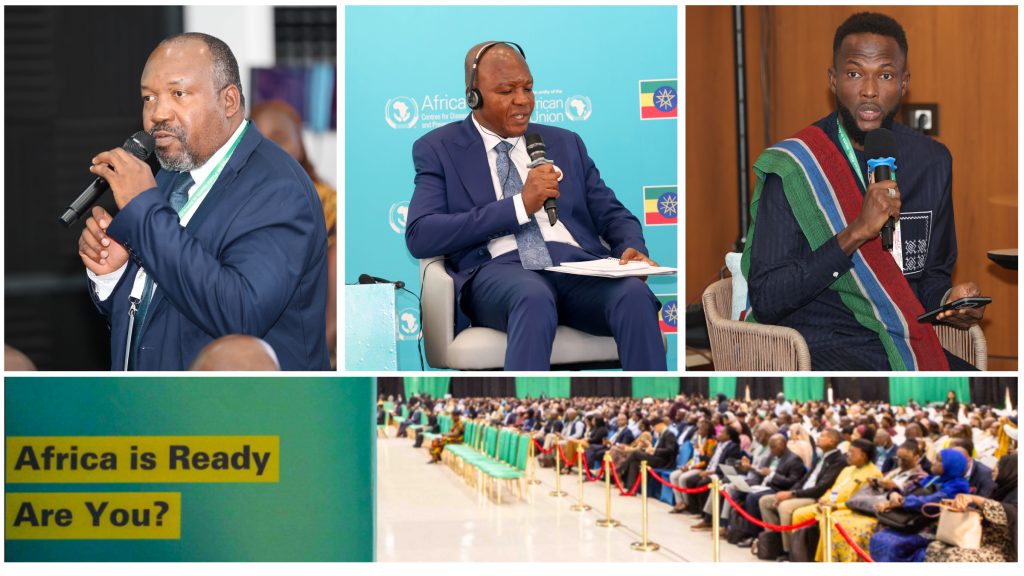
The African Parliamentary Task Force on Domestic Resource Mobilisation for Health sets out what parliaments need to turn health sovereignty commitments into funded services.
ADDIS ABABA, 27 November 2026 – Africa’s plans for health security and sovereignty have a missing signature. As the International Conference on Public Health in Africa (CPHIA) closes in Addis Ababa today, parliamentarians are reminding leaders that every option on the table, from country health compacts to new fiscal targets, will have to pass through a national budget.
CPHIA 2026 was built around the five pillars of the African Union’s Health Security and Sovereignty agenda, adopted by AU heads of state in February, and domestic financing is one of them. Several initiatives are now shaping how it is delivered. The African High-Level Ministerial Committee on Global Health Architecture Reform, under the leadership of Africa CDC, brings together ministers of health and finance to reform global health. The Accra Reset wants each country’s health money behind one plan and one budget. The CPHIA Health Financing Pathway Compact is the latest continental proposal that parliaments will have to test against their own budgets and help put into practice.
Every fiscal target in these plans becomes real only when a parliament votes on the budget. While parliaments have had little say in the reforms that set those targets, the reforms depend on three of their powers: passing laws, voting budgets and holding governments to account, in public, for what is spent.
Members of Parliament from the Democratic Republic of the Congo, The Gambia, Ghana and Zimbabwe met on 25 November in Addis Ababa to add their voices to the CPHIA discussion on domestic health financing. The African Parliamentary Task Force on Domestic Resource Mobilisation for Health is sharing knowledge across countries and working together to increase commitments to health and improve the tracking of health spending, so that budgets are released on time, spent on what Parliament approved, and tracked down to the clinics and community services people rely on.
“Parliaments must have the full information when deciding on budgets,” said Hon. Daniel Molokele, Member of Parliament, Zimbabwe, who is the current Co-Chair of the Task Force. “When a health budget reaches our committees, we should know what our governments have promised on the global stage, what our communities need and also what was actually spent last year.”
As external funding shrinks, African governments have raised their own health spending, though not by enough to replace what was lost or to reach the targets they set themselves. International funding for global health fell 12% in 2025 to its lowest level since 2012, according to the Institute for Health Metrics and Evaluation (IHME). IHME’s preliminary estimates show a further 5% fall in 2026. In response, 49 of 54 African countries raised their own health spending, but not by enough to make up for cuts or to meet continental benchmarks. In 2023, South Africa was the only one of 54 African countries spending at least 15% of government expenditure on health, the target set in the 2001 Abuja Declaration.
“For several years, a large part of our health budgets was developed based on the financial support our partners were willing to provide. This situation is changing, and Parliament must be able to track every franc the government commits to the health sector, from budget approval to its execution,” said Hon. Dieudonné Mposhi, Member of Parliament at the National Assembly of the Democratic Republic of the Congo.
Oversight is at a critical moment now. For the Global Fund, at least 15% of each country’s allocation depends on the government committing and then spending an agreed amount of domestic resources on health. Those commitments have to appear in the 2027 budgets that parliaments are debating this month.
At CPHIA, sustainable financing and the health security and sovereignty agenda took centre stage. Reform proposals such as those put forward by the Accra Reset point towards financing led by countries and anchored in national budgets. Its High-Level Panel report calls for a one-stop country compact within 12 months, jointly led by ministries of health, finance and planning, with a costed health investment plan built into the national budget. As President John Mahama of Ghana takes the African Union chair in January 2027, he has committed to carrying the Reset agenda into the AU’s collective policy framework. Yet, none of the report’s ten recommendations mentions a parliament.
From continental agendas to the realities of implementation at home, the Task Force’s champions brought important examples of what parliamentary oversight and public accountability look like and why it matters.
“Sustainable health financing starts with transparency. In The Gambia, a Member of Parliament can open the budget execution brief and see whether the health money we voted for was released. We call on our colleagues across the continent to make the same demand,” said Hon. Modou Lamin B. Bah, Member of the National Assembly of The Gambia and Chairperson of the Network of African Parliamentary Committees of Health (NEAPACOH).
The Task Force champions are learning from each other’s budget wins, using their mandate to protect their constituents’ right to health, and leading with the conviction that investing in health is not optional.
Africa’s health sovereignty, they argue, will be won or lost in its national budgets.
###
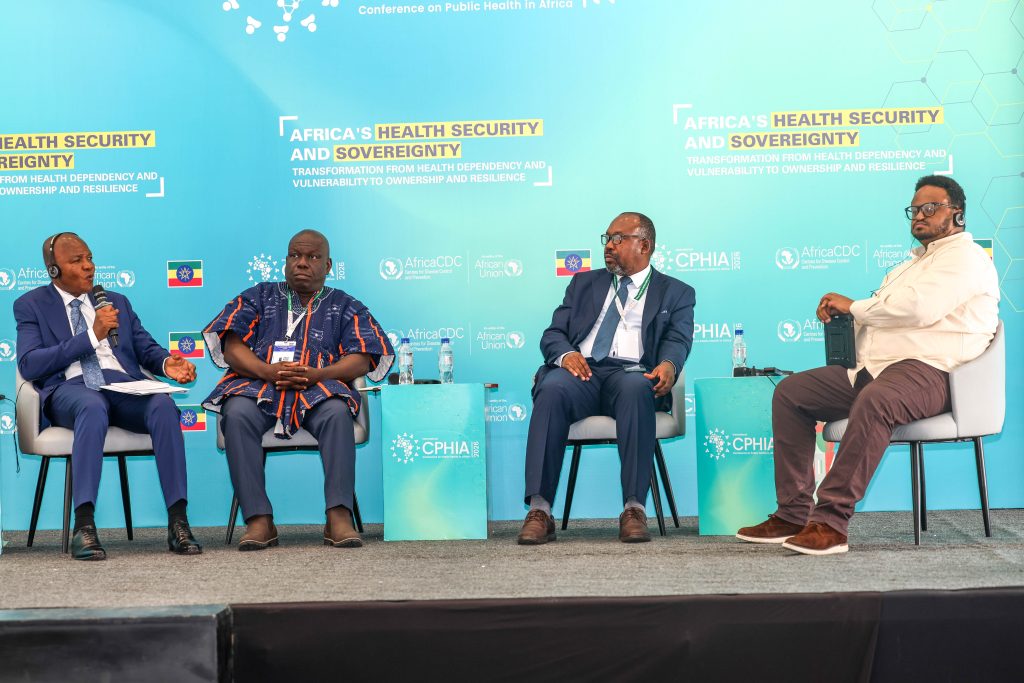
Notes to editors: The members of the Parliamentary Task Force on Domestic Resource Mobilisation (DRM) for Health who met in Addis included Hon. Daniel Molokele (Zimbabwe), Hon. Modou Lamin B. Bah (The Gambia), Hon. Charles Agbeve (Ghana), and Hon. Dieudonné Mposhi (Democratic Republic of the Congo). The African Parliamentary Task Force on Domestic Resource Mobilisation for Health is supported by the Global Fund Advocates Network Africa (GFAN Africa) secretariat hosted by WACI Health and Impact Santé Afrique.
The African Parliamentary Task Force on Domestic Resource Mobilisation for Health brings together parliamentarians from Francophone and Anglophone Africa who speak for the communities that elect them. It advocates for increased national financial resources for health, and for progressive policies that promote equitable access to health services and strengthen health systems across the continent. Its current phase runs for two years with five champions, from Cameroon, the DRC, The Gambia, Ghana and Zimbabwe.
The Global Fund Advocates Network Africa (GFAN Africa) is a regional civil society network advocating for sustained and equitable health financing for Africa, with a focus on the Global Fund to Fight AIDS, Tuberculosis and Malaria. GFAN Africa brings together advocates from across the continent to ensure community and civil society voices shape decisions on global health financing and architecture. The Secretariat is hosted by WACI Health and Impact Santé Afrique.
WACI Health is an African regional advocacy organisation that champions an end to life-threatening epidemics and advances health for all, shaping political priorities through an effective, evidence-driven Pan-African civil society voice and action. It convenes the African Civil Society Platform on Health (CiSPHA), Global Fund Advocates Network Africa (GFAN Africa), among others. It is also a steering committee member of the HEAR-CSO Consortium on global health architecture reform.
Impact Santé Afrique (ISA) is a pan-African civil society organization headquartered in Cameroon, working to advance health equity through advocacy, community engagement and parliamentary partnership. ISA convenes the Global Fund Advocates Network Africa (GFAN Africa) and the Civil Society for Malaria Elimination (CS4ME), among others, and co-chairs the C7 Global Health Working Group.
Media contact:
Carthi Mannikarottu
Communications Lead, WACI Health
carthi@wacihealth.org