Universal Health Coverage
Everyone gets the care they need, without financial hardship
WACI Health advocates for universal health coverage (UHC) that reaches everyone, including the people health systems most often leave out, and for communities and civil society to take part in the decisions that affect their health.
The Civil Society Engagement Mechanism for UHC2030 (CSEM) is the civil society constituency of UHC2030, a global multi-stakeholder platform hosted by WHO in collaboration with the World Bank and the OECD to accelerate sustainable progress towards UHC. WACI Health co-hosts the CSEM Secretariat with Management Sciences for Health (MSH).
Today, 4.6 billion people still lack access to essential health services and 2.1 billion face financial hardship when they pay for care. The burden is unequal. Three in four of the poorest people face that hardship, compared with fewer than one in 25 of the richest. Governments have committed to reaching UHC by 2030, and UN High-Level Meetings on UHC review their progress. Those commitments reach people through national decisions on budgets, benefit packages and services, yet the people most affected are often absent when those decisions are made.
CSEM works to change this by raising civil society voices within UHC2030, to ensure that UHC policies are inclusive and equitable and that systematic attention is given to the most marginalised and vulnerable populations.
Purpose
What We Do
As co-host of the CSEM Secretariat, WACI Health coordinates civil society engagement in UHC2030’s governance and advocacy, and supports the civil society representatives on the UHC2030 Steering Committee. Through the CSEM Advisory Group and a network of 1700 members from over 130 countries, CSEM represents civil society within UHC2030 and carries its members’ priorities into global decisions on UHC. CSEM also connects civil society advocates and organisations for joint actions at global, regional, and national levels.
The network works to influence how UHC policies are designed and implemented, so that they reach marginalised and vulnerable people. It consults its members ahead of global moments such as the UN High-Level Meetings on UHC and the World Health Assembly. Their priorities then go to governments as joint statements and recommendations.
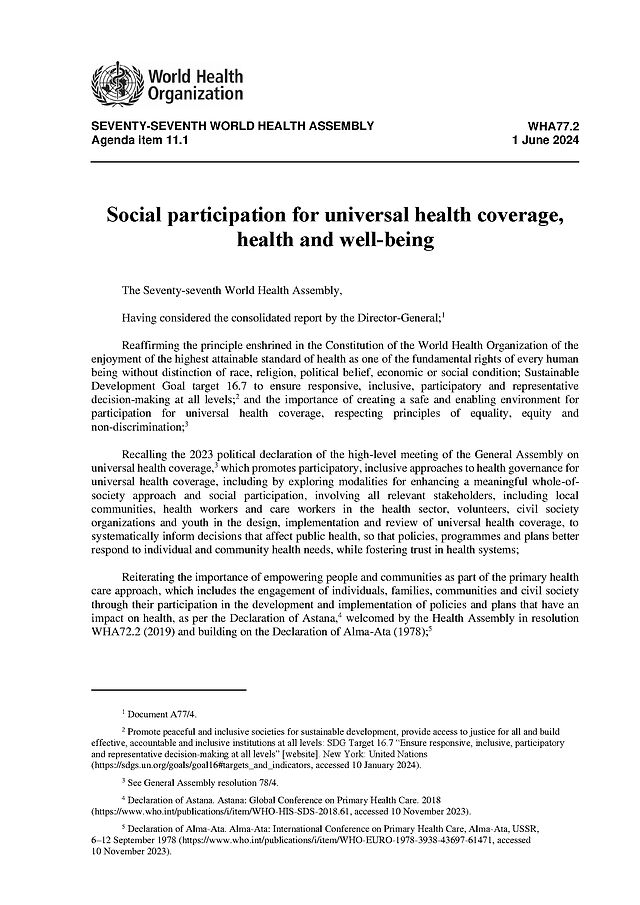
CSEM pushes for health decisions to be made with the people they affect. It mobilised civil society behind the World Health Assembly’s resolution on social participation adopted in 2024, and now works with Member States and partners to put the resolution into practice and to track how governments are carrying it out.
Each year, CSEM with UHC2030 and partners leads the UHC Day campaign on 12 December, the anniversary of the UN General Assembly’s unanimous endorsement of universal health coverage in 2012. The campaign brings governments, international agencies, parliamentarians, civil society, and young people together to take stock of progress and push for the action needed to deliver health for all.
Latest stories
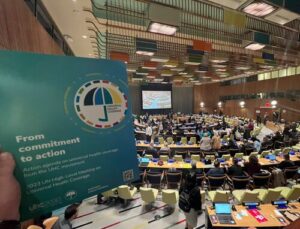
Reports, briefs and statements
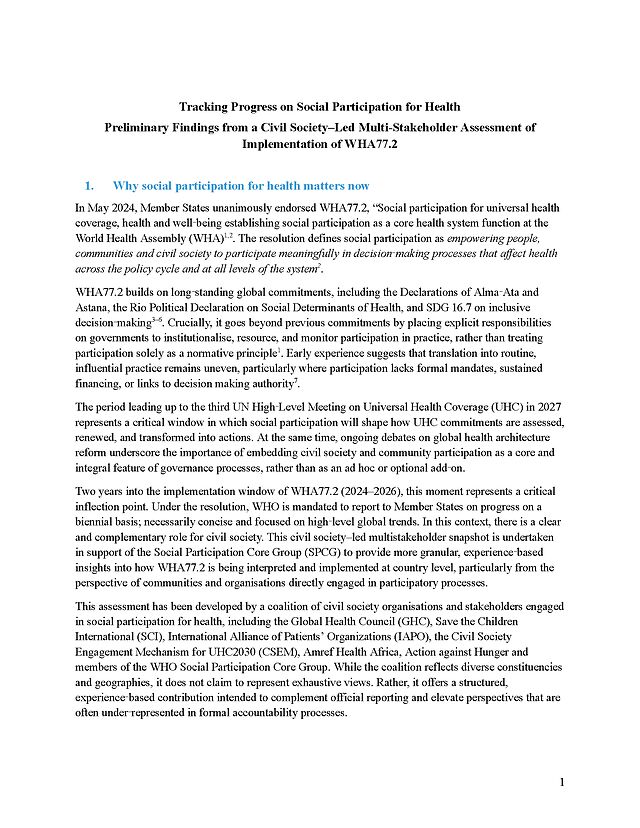 Reports
Tracking Progress on Social Participation for Health: Preliminary Findings on Implementation of WHA77.2
 Advocacy Materials
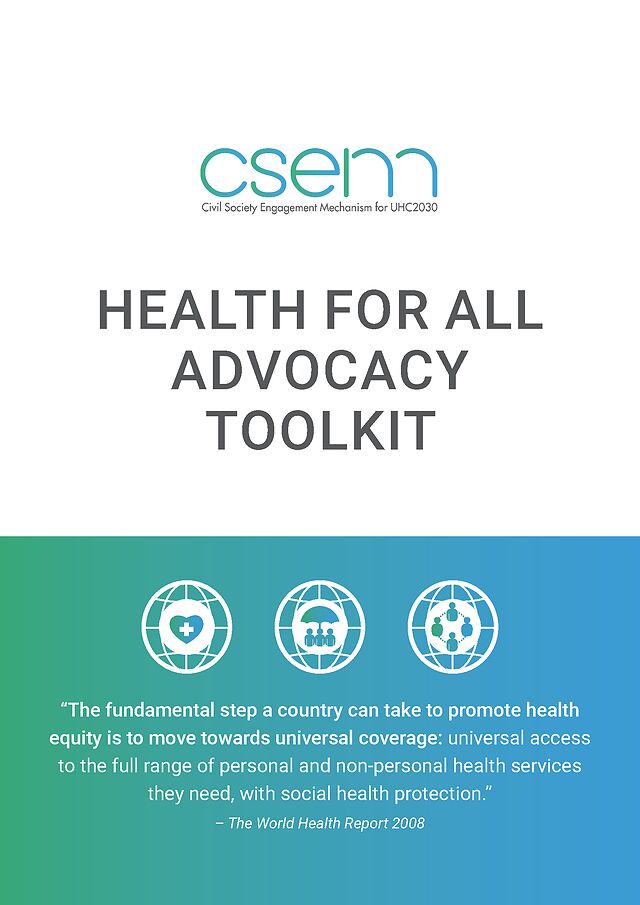
Advocacy Toolkit on Social Participation for Universal Health Coverage, Health and Well-being
 Publications
WHA77.2: Social Participation for Universal Health Coverage, Health and Well-being
 Advocacy Materials